Posted in Geek Out, Reading

To E-Read or Not to E-Read?

VMG 002

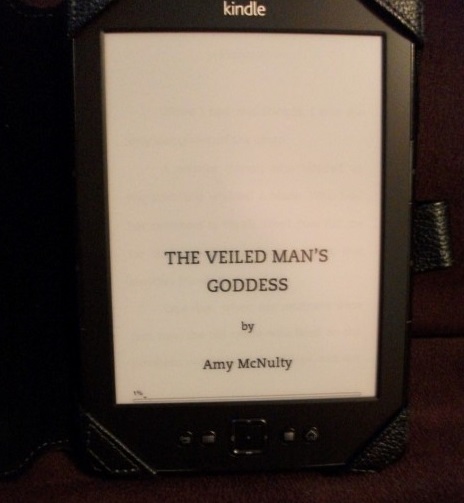
Perhaps you can tell from the odd extra spacing, but that’s my manuscript cover page on my new Kindle.  My manuscript looks so… real! (Like it wasn’t real before? Well, you know, it’s nice seeing it almost book-like in any format outside of Word.) I finally joined the digital book world and got an e-reader as a gift this week, and I love it even more than I thought I would!

Let me back up. I’m not a huge digital gadget person. Cell phones don’t interest me, and I pretty much only use mine for calling people, and not that often. Reading books has always been a nice way to escape the endless LCD- and backlit-screens I stare at all day while working, surfing the web, watching TV and playing games. The idea of staring at yet another screen to read just wasn’t appealing since reading was one of my last hobbies left that was screen-free.

That’s not to say I poo-pooed anyone else who wanted to read books on e-readers! It doesn’t bother me at all how people choose to read (or “hear” books like radioplays via audiobooks, as my sister loves to do!); I just love that they’re reading. My mom got a Kindle a few years ago, and it’s made reading easier than ever for her, and she’s become an even more avid reader. I just never could think of a reason for me to get one. But when I saw my mom’s Kindle in person, I was surprised how paper-and-ink-like the screen was! Seriously, I’ve never seen such a beautiful, glow-free digital screen with such crispness and clarity.

Last summer I was invited to review some e-books in the new Sweet Valley adult series, The Sweet Life, but I didn’t have an e-reader. (And my mom couldn’t lend me hers. She seriously reads too much to part with it for too long!) So I read it on my laptop. My eyes went googly. I saw a cheap brand e-reader on sale for like $30 one day and thought I’d get it just to finish the e-books on, but it was terrible. It was an LCD screen (so it felt just like staring at the laptop screen anyway), and the e-bookstore was terrible, and it was hard to navigate, and yeah… You get what you paid for. Luckily I was able to return it even though I’d opened it and tried it out! I knew then I’d wait and save up or ask someone for a Kindle.

So I got it last week and I uploaded my manuscript to it right away to check it out. I also bought an e-novella and got the first five chapters of Leigh Bardugo’s Siege and Storm, which are currently available for e-readers for free. (And which only serve to make me more anxious about waiting for the release of the rest in a couple of months, but I’ve been reading it anyway!) I got a few more free e-books I haven’t really touched yet. I’m scared of having too much to read because there’s a lot available for free!

But I’m still reading traditional paper books. I have nine on my to-read shelf (six of which have been there for way, way too long and keep getting pushed down the priority list) that I vowed to finish this year. I love being surrounded by shelves full of books, and I think I will buy Siege and Storm in print instead of electronically to finish reading. But I’ve been surprised how little reading the first few chapters on my e-reader has bothered me.

I have decided that whenever the next A Song of Ice and Fire book comes out (years from now…), I’m going with the e-reader since I realized with the last book that it’s a bit of a pain to carry a 1000+-page hardcover around. And it’ll be great for the dozenth time I read a manuscript, when I’m just looking for little tweaks (and then can run to the laptop and make them, without having stared at the laptop screen for hours and hours).

Do you have an e-reader? Which one? Do you prefer reading books electronically, on paper or both?
Posted in Geek Out, Reading

Late to the Party or First One in Line?

I was trying to think of how many books I’ve read as soon as they came out. It’s a pretty limited number, and that small number is limited largely to sequels/prequels to books I already loved, or on occasion, a book by an author I know I already love. I don’t think I’ve ever gotten a brand-new book by an new (or new to me) author anywhere near its release date.

It seems like I’m always “late to the party” when it comes to books. They have to get a lot of buzz and/or a recommendation from a friend before I bother to pick them up. It’s not that what the new (or new to me) authors have to offer doesn’t interest me–far from it–but it feels like I’ve always got a pile of books to read (probably because I literally do) as is, mostly books that others read months or even years ago and I’m just getting to. Fitting in a brand new book I’m not even sure I’ll like is hard when I’m already excited about the books I already have! But it does feel weird to be on the sidelines, to hear friends discuss a book you may not read for years if at all. (But of course, I do have friends who plow through books at a much faster rate than I do!)

I picked up ONE YA book last year that my friends hadn’t already read, and I wasn’t too impressed. (I read it a few months after it came out–I’d just read a summary online and got intrigued.) A few years ago, I did read another series that I liked and none of my friends have yet read (The Forbidden Game by LJ Smith, if you’re interested), but I think that covers the only YA books I’ve read that they haven’t. So maybe I’m not meant to explore the bookscape wilds without someone to light the path before me, and that’s okay. I may be late to the party, but I’ll get there someday!

That said, I’d love it if people read my first book as soon as it came out. 😉 But I understand that there are just too many exciting books out there to read!

Do you love discovering new favorites in brand new releases or are you still crossing old releases off of your to-read list?

Posted in Reading

My Reads for 2012

It’s a little early, and if I find the time, I may finish the book I’m currently working on (and another… probably not, but you never know), but I thought I’d list the books I read this year! I’m a little excited because last year I barely read any books. I got a lot more gaming done, though. Sometimes it seems like I have to rotate my hobbies if I ever want to have time for it all.

This list is nothing compared to some of my friends’, who single-handedly keep the library open or the e-bookstores in business (I kid). But there are five 1000-ish-page books on this list, so that’s got to count for something, right?

2012 was a pretty awesome reading and writing year for me. I got into one of my favorite series (a few years behind most fans), which in turn inspired me to get back into serious creative writing, and I finally finished my first manuscript. (I’ve gotten close with a second one, but we’ll see if I can finish its first draft within the last few weeks of the year or not!)

This list covers novels only, no graphic novels or manga, of which I read plenty this year:

  1. Graceling by Kristin Cashore (I’d started it in 2011, though)
  2. Mr. Monk on Patrol by Lee Goldberg (I was a big fan of the show, and some of the books continue on from where the show left off–too bad they’re ending in a few weeks!)
  3. The Hunger Games by Suzanne Collins
  4. Catching Fire  ditto
  5. Mockingjay ditto (this was the new favorite series–I read books 2 and 3 over a weekend)
  6. Fire by Kristin Cashore
  7. The Tenant of Wildfell Hall by Anne Bronte (because it was about time I read a work by the third Bronte sister, and I’d enjoyed the TV production)
  8. The Girl Who Was on Fire collection of essays (still obsessing about Hunger Games at the time)
  9. A Game of Thrones by George R.R. Martin (I got into the show a year late)
  10. A Clash of Kings ditto
  11. Mr. Monk Is a Mess by Lee Goldberg
  12. The Sweet Life ebooks 1 and 2 by Francine Pascal (since I got the ebooks for review–I still haven’t finished the saga, though; as long as I wasn’t reviewing, I was waiting for the print version)
  13. Sweet Valley Confidential ditto (another book for review)
  14. A Storm of Swords by George R.R. Martin (my favorite of the series by far)
  15. A Feast for Crows ditto
  16. America Again: Re-Becoming the Greatness We Never Weren’t by Stephen Colbert (it has pictures, but it counts, right?)
  17. A Breath of Eyre by Eve Marie Mont
  18. A Dance with Dragons by George R.R. Martin (my least favorite of the five–it took me three months to finish, as I kept getting distracted. The others took me about a month each.)
  19. Who Could That Be at This Hour? by Lemony Snicket (yay for more Snicket!)
  20. Divergent by Veronica Roth (a really addicting read I got through in three days; I’m going to read the next one soon, I hope)
  21. Bitterblue by Kristin Cashore (still working on it–I wonder if I’ll finish by the end of the year?)

Here’s to more good reads in 2013! What did you read this year?

Posted in Books I Loved in Middle/High School, Reading

Books I Loved in Middle/High School, Part 8

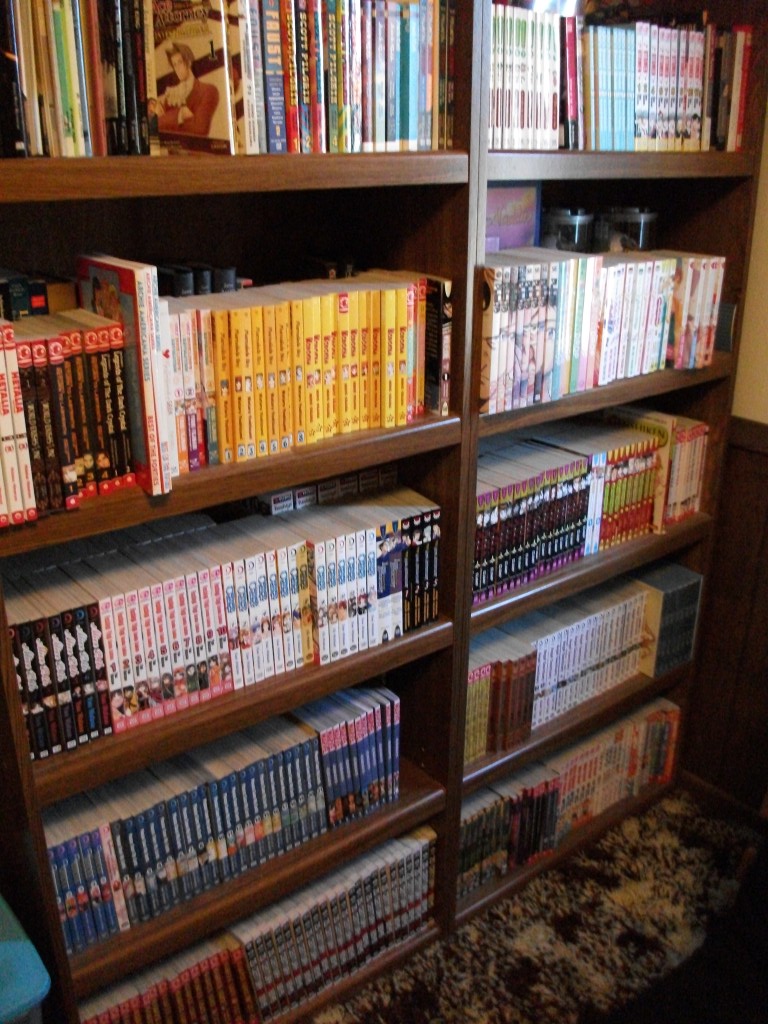
I’m going to sort of “cheat” for the next few posts on this topic. I decided to move on from the novels I loved in middle and high school for now to the manga I loved at that time, but technically, it wasn’t always available. The unflopped-$10-or-less-a-pop manga boom began when I was just getting to college. When I was in middle and high school, I had limited access to manga. What I did get was imported from Japan (at least I saw pretty pictures and practiced my fledgling understanding of Japanese, but I certainly didn’t totally follow the story) or limited/edited/flopped (as in mirror imaged to follow American left-to-right reading style)/much more expensive for the most part. In other words, this library wasn’t anywhere near this large back then (each shelf is double-stacked; there’s another row of volumes behind it, although some non-manga stuff has creeped in there. Should I be bragging about probably thousands of dollars spent on manga over a decade and a half? Not really, but yes… Yes, I should… ):

Still, the manga I’ll cover in this series meant a lot to me as a middle and high schooler, and they still mean a lot to me today. I may or may not have had the translated volumes until after high school, but I often had import volumes and grew to love these series through anime adaptations, so I certainly knew the stories.

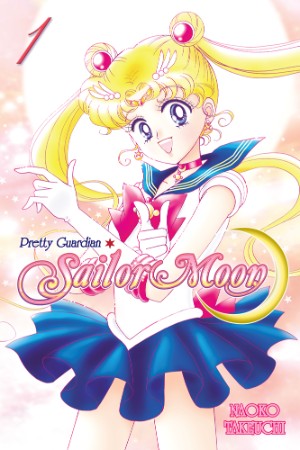
Bishoujo Senshi Sailormoon (Pretty Solder Sailor Moon) by Takeuchi Naoko

I have to start here. Sailor Moon was my first “official” introduction to anime at age 12–what I understood to be anime, anyway–and it snowballed into a huge part of my life ever since. Japanese anime and manga not only inspire me creatively, but this facet of pop culture inspired my love for the Japanese language and culture, helped me make many of my most treasured friends, and led me to meet my boyfriend of seven years in a college Anime Club, too. (More than seven years ago. We didn’t date immediately!)

So although I’ve read and seen so many manga and anime since, and I may not think SM stands up as the very best of the best or anything, it means a lot to me. At the time, finding a whole team of girl superheroes–girls around my age at that–spoke to the comic-book-loving girl I was. The series not only balances superhero battles of good and evil, but it has drama, comedy and romance, too.

The series starts with a single heroine, 14-year-old Tsukino Usagi, who discovers she can transform into Sailor Moon and fight evil demons attacking Tokyo thanks to a talking cat named Luna (whom I named my own kitty after). Eventually, she finds four other girls her age who are other Sailor Senshi, and even later, she encounters five more, older and younger girls, to round out the team. (And possibly even more girls after that. It gets complex.) There’s way more to it than that, including reincarnation and a love that lasts through lifetimes, but that’s the very basics.

The anime is actually quite different from the manga, other than characters and the enemies of each battle arc, but I actually did have access to translated SM manga in middle and high school, a sort of butchered version by Mixx/Tokyopop that I collected first in a magazine called Mixx Zine, then in a magazine called SMILE, then in individual American comic-book-style issues, and then in graphic novel form. Actually, some of that was concurrent; they published different arcs at once. And the translation used half English dub names and half original Japanese names; it was just a mess! But still, I collected it eagerly. And a few years ago finally rid myself of the whole haphazard mess… Thank goodness Kodansha started bringing out a much nicer and better translated version last year! (And they were the first to translate the prequel series, Codename Sailor V, yay.)

The original manga is 18 volumes, although the re-release packs more in one volume, so it should be 12 (14?) in the end. Although it’s much more drawn out, I think I prefer the anime to the manga, although I’m a fan of the manga’s gorgeous style. Still, I appreciate having two versions of the same story; many manga are almost completely unedited adaptations of their manga (or these days, light novel or game) origins.

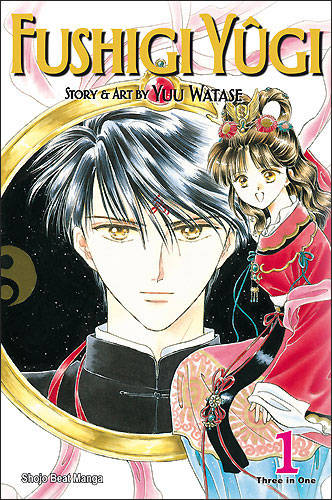
Fushigi Yuugi (or Yugi; “Mysterious Play”) by Watase Yuu

This series became my absolute favorite series in middle school, perhaps only eclipsed in high school by a another Watase series, Ayashi no Ceres. I started with the anime (and watched it four or five times all the way through–there was less to watch back then!) and collected the manga in Japanese shortly thereafter, but some of the manga was available in English by the time I got to high school, in a magazine put out by Viz called Animerica Extra. I collected the manga in English through the magazine for all of its run, but it was canceled before the 18-volume manga ended, and years later I got rid of the magazines and collected it in six big three-volumes-in-one re-releases.

FY follows the tale of two 15-year-old Japanese best friends, Yuuki Miaka and Hongo Yui, who get magically sucked into a book about fictional ancient China. One goes on to become the Suzaku no Miko (“priestess of Suzaku”‘; Suzaku is one of four mythical beasts in Chinese folklore), and the other the Seiryuu no Miko, her mortal enemy. How these two friends come to be at such odds is a compelling part of the drama, and the two are in a race to gather their seven warriors and call their mythical beasts to grant them three wishes. Oh, and those warriors? Most are handsome men, and there are love triangles and rectangles and all sorts of shapes going on, which spurs more of the drama. And the series can be pretty funny at times, too.

There’s a prequel series, Fushigi Yuugi: Genbu Kaiden, about the first Japanese girl to become a miko in this ancient book, that’s still coming out both in Japanese and English, but volumes are few and far between these days since Watase is juggling multiple projects and this one seems to be on the back burner. The middle schooler in me loved hearing there would be another tale set in that universe (especially since we learn a bit about this protagonist in the original series), and I do love many things about it, but it perhaps doesn’t have quite the charm as the original to me (it’s less funny, too), and the conflict is more political than personal like it was in FY. I actually would have preferred a prequel story about the Byakko no Miko, who comes after the Genbu no Miko, from what we learned in the original FY, but I’m not sure Watase will be up for it since she’s accomplished her dream of doing a weekly shounen (boys) manga, as opposed to the monthly shoujo (girls) manga she used to do. Ah, well.

Posted in Books I Loved in Middle/High School, Reading

Books I Loved in Middle/High School, Part 7

Today I have a few more books I loved in high school to reminisce about (or “about which to reminisce” if we’re going to be grammar sticklers).

The Mayor of Casterbridge by Thomas Hardy

This book was one of the books we read as a class in, I believe, AP English my senior year. I might have been one of the few who enjoyed it! I can’t explain why the book connected with me, although looking back, I wonder if it was the start of my love for classic English literature that continued in college with the likes of Jane Austen and the Brontës. (And talk about loving “classic” English literature–I did my honors college thesis on Sir Thomas Malory’s Le Morte d’Arthur, arguing it was the first “true novel.” A 15th century work, entirely in Middle English; it was such a blast to read and analyze.) I was so determined to write a good term paper on this book, I even went to a nearby college library for sources. *gasp* We had the Internet, but it wasn’t as comprehensive as it is today, and books always make for more legitimate resources.

The Mayor of Casterbridge begins with a drunkard named Michael Henchard at a tavern selling his wife and baby daughter for a small amount of money to a lonely sailor who offers to buy them off of him. (She’s sitting right there, by the way!) Obviously, Susan isn’t too happy with her husband, but she’s also sick enough of the man (they were arguing, which is why the sailor thought he’d better appreciate her) that she goes along with it. When Henchard recovers, he finds his wife and child gone.

Years pass, and Henchard has become a new man who’s risen through the ranks in his small town of Casterbridge and is now the mayor. But his drunken actions of eighteen years prior still haunts him, and he’s worried people will find out what kind of man he once was. Lo and behold, who should move into town than a sailor’s widow and her young maiden daughter? The book is not only about keeping secrets–and untangling the truth about whether or not Henchard and Susan are still married, at least on paper–but Henchard’s desire to form a fatherly relationship with his daughter without revealing his past.

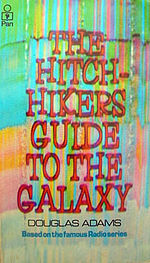
The Hitchhiker’s Guide to the Galaxy series by Douglas Adams

Unless my memories are muddled (which wouldn’t surprise me after more than a decade), I think the first The Hitchhiker’s Guide to the Galaxy was on the “choose your second summer reading book” list for my senior AP English class. I wound up being an English major in college (after a brief detour), and I’m glad I had a foundation in so many of the classics, but admittedly, I only truly enjoyed maybe one in three of the books I “had to” read. When I chose this book for required reading, it was a welcoming break! This book is so funny. I read it quickly and went out and bought this huge five-book collection of the whole “trilogy” (as far as what Adams penned anyway).

It’s been a while since I read it (although I remember the movie that came out a few years ago), but even if it was fresh in my mind, I’m not sure I could fully explain it. Suffice to say it follows an ordinary man on an intergalactic adventure after his home… and the whole planet… is destroyed for a hyperspace bypass. Anyone who talks a lot about towels or tells you that the answer to life is 42, and that what you actually ought to want to know is the question to life, the universe and everything, has read this book!

During the rest of that school year, we had to continue reading books outside of what was required for class discussion, and they had to be “quality” books approved by the teacher. (Some of my other interests wouldn’t fly!) So for a while I got away with reading the sequels (the first one was on the reading list, after all!) until my teacher told me it was time to branch out and read something else. I don’t think I finished all five books, and I’m not even sure where I left off. But still, the first was definitely worth the ride!

And no, I didn’t realize that today’s the anniversary of the book’s publishing when I sat down to write this.

Posted in Books I Loved in Middle/High School, Geek Out, Reading

Books I Loved in Middle/High School, Part 6

Sorry I haven’t been posting as often as I’d like; I’ve been busy in the writing cave, working on exciting things! Today I felt like reminiscing about some more of my favorite reads from high school.

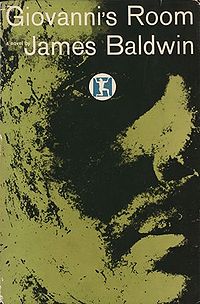
Giovanni’s Room by James Baldwin

This was another required reading in high school (I think my senior AP English class? I’m not sure…) that I took to. (I have an honors degree in English literature and I was still bored by half the books I had to read for school, bad me! But I read them, analyzed them and all those good things.) It’s about a young American man, David, who spends time in Europe as sort of a last hurrah before getting married to his girlfriend. While he’s there, he’s pretty unsure he even wants to get married… It turns out, we eventually discover, it’s because he’s gay but isn’t fully ready to admit it.

After quite a while abroad failing to find himself, David meets Giovanni, a bartender in a gay bar. They fall in love, and David moves into “Giovanni’s room.” However, David has still not come to terms with himself and broken it off with his fiancee… And a dark act soon threatens their relationship.

It’s been a while since I’ve read the book, so I don’t remember the details, but I do remember being swept up in the narrative, particularly the beautiful, desperate romance, and crying toward the end, I felt so bad for the characters. I went on to recommend the book to a few friends at different schools, and they loved it too. This is a very poor analogy for a piece of classic literature written in the 1950s, but I felt at the time it had a very “anime” feel to the story (and my 17-years-and-counting love of anime was certainly strong in high school), which is perhaps why my friends and I enjoyed it. I’d love to see an anime adaption someday, but that’s never going to happen!

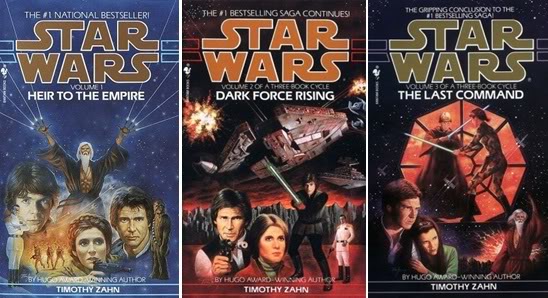
Star Wars: Heir to to the Empire trilogy by Timothy Zahn

In high school and late middle school, I was obsessed with Star Wars. I’d seen bits and pieces of it here and there before (I remember having a fondness for Jabba as a kid for some reason), but I didn’t properly sit down to watch them from start to finish until the 20th anniversary theatrical re-release in 1997… And I went nuts. I saw each of the original trilogy three times in theaters over the next few months (so nine visits for SW), I wore SW shirts every day I could to school (when we were allowed to stop wearing uniforms), I so blindly defended anything to do with SW that I saw The Phantom Menace SEVEN TIMES in theaters. (Ha ha, eight if you count this year’s 3D re-relase. Yes, I saw it, despite disliking 3D movies… I still watch the Clone Wars TV series, too, which my boyfriend makes fun of as being one long series of senate meetings, despite being a show for kids… It’s mostly true. But where else would you get the insane, flesh-eating torso of Darth Maul melded onto a robotic spider?) Attack of the Clones kind of finally made me see that the prequels lack what made the originals great (yes, I still dislike II more than I; maybe it’s the crappy romance… Oh, by the way, I still saw it twice in theaters despite that!), although I’m all right with Revenge of the Sith, disappointing that the dialogue and acting may be at times.

But anyway, back in high school, I was still in high SW gear. So that meant getting my hands on SW in any form, and I discovered the rich novel universe, which told what happened to the characters over the next few decades. (I wonder how far they’ve gotten now? Seriously, I was reading through until some of Han and Leia’s kids–yes, they have three, boy and girl twins and another son–had kids of their own, and Leia was dealing with grey hair and menopause…) There were quite a few of the novels I really liked (and some that bored me a bit), but the “Thrawn trilogy” was my favorite.

Set about five years after Return of the Jedi, these books center around the heroes of the New Republic dealing with the last remnants of the Empire. (They didn’t all just die when their leader blew up, after all.) Strangely, the Empire is led by an alien–bizarre considering Palpatine was an alien-cist (? racist against aliens?)–but he was that good at what he did; he made it to Grand Admiral even when Palpatine was alive, and was the highest-ranking leader left. Thrawn. The well-mannered, harsh blue-skinned guy with black hair in a white uniform… After Darth Vader, he’s just the perfect SW villain to me.

The books are also notable for introducing Mara Jade, a secret assassin strong with the Force called “the Emperor’s Hand” (She’s also so good, she got the job–Palpatine was also a misogynist after all–all those white human men in high ranks…) who’s out to fulfill her final mission from her master: kill Luke Skywalker. I loved Mara Jade–a strong, likeable female villain! I tend to like villains in fiction in the first place, though…–and all the fights she had with Luke… And readers did, too. It took quite some time, and she had to move beyond her dark past, Luke had to have another fling or two, but I’ll tell you a huge spoiler: Mara Jade Skywalker. Enough said!

There are some funny things in the books now, too. The details are vague (I read them more than once, but it’s been a while), but since they pre-date the prequels by eight years (I believe they may have been the first official books that took place after RotJ? Later books went back and bridged the five-year gap, though–Leia and Han already have their older two kids in these books for one!), the “Clone Wars” was still misunderstood and I think a crucial part of the book involved them stumbling upon a random cloning facility and there being clones of Jedi Masters… Oops. I’m sure they shoehorn that in there somehow, though.

Posted in Books I Loved in Middle/High School, Reading

Books I Loved in Middle/High School, Part 3

A Wrinkle in Time (and the rest of the Time Quintet) by Madeleine L’Engle

I have to admit that I never read The Chronicles of Narnia books until my twenties. (It was the first The Lion, the Witch and the Wardrobe movie that finally did it. I’d seen the animated movie and even a community theater production as a child, but I think I was too afraid of the witch to turn to the books.) My trippy but awesome fantasy for kids with apparently Christian themes that I missed at the time was L’Engle’s Time Quintet.

Whenever my family went on road trips when I was growing up, my parents softened my distaste for long car rides and built up excitement for my sister and me with a little “gift basket” of things to keep us entertained. Since I was the voracious reader, I got all of the books. A Wrinkle in Time was given to me on one such occasion, and I remember devouring it quickly over the next few days and asking to be taken to a bookstore while still on vacation, so I could pick up the next book!

Despite this, I have to admit that my memory of what happens in these books is fuzzy. Even though I took time out from studying for my college exams to watch the TV movie adaptation in 2004 (which I think I thought was okay), I still can’t remember much. I do remember this, though: it features a strong, young female protagonist on an epic, science fiction/fantasy adventure. That was pretty rare for me to find at the time. I also think that Many Waters was one of my favorites of the series. Something about the twins being older and traversing a desert land… I really ought to re-read more of my childhood favorites! (Too bad my to-read list is endless at the moment.)

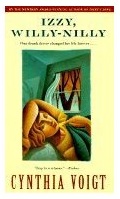
Izzy, Willy-Nilly by Cynthia Voight

Not every book I read in middle or high school was part of a series. (Although you wouldn’t know that from the books I’ve covered in these blog posts so far!) Although I didn’t remember all of the details of this book (that’s what summaries are for!), I remembered I really liked it.

The name of this book is fun to say! However, the book is anything but fun because poor Izzy is “willy-nilly” when her life is turned upside down. Izzy, a popular high school cheerleader, makes a few bad choices and winds up missing a leg after getting into a car with a drunk driver. Not only does she go through a lot of powerful emotions dealing with her disability and physical therapy, but she discovers that everyone treats her differently, too. She can’t go back to being that popular cheerleader. She doesn’t even know if she wants to. So she learns what real friendship is all about.

I remember thinking the book had a lot of powerful images. A scene where Izzy takes a bath after she’s let out of the hospital and just stares at her amputated leg as reality sinks in still sticks with me. And it showed a “popular girl” character with depth! Popular girls aren’t the usual type of character I enjoyed reading (Sweet Valley excepting, but there were geeks in that, too), yet here, she was entirely compelling.

I read this for school and I remember my friends really loved it, too. We had to do a sketch of a scene for class, and I got to play Izzy (sitting on one leg). We borrowed the school nurse’s wheelchair with her permission (glad no one needed it while I was in class!), and my friends pushed me in it all the way back to class. Several people stopped us to ask me if I was okay… Oops!

Posted in Writing

Product/Pop Culture References in Writing

The work in progress that’s been getting the bulk of my attention lately is contemporary. Or should I say “roughly contemporary.” I don’t plan on explicitly stating what the year is, but I do date it unintentionally because I describe events that took place recently as having taken place “last year.” I also drop product names like I would in everyday conversation whenever I feel it’s appropriate. I even mention celebrity names.

It’s a strange feeling for me. My finished manuscript is fantasy (yay for making up a world from scratch!) and my other WIP doesn’t feel like it needs any particular setting other than “roughly about whenever you’re reading it,” so there aren’t any product or pop culture references. In this one, I just felt like the characters needed to discuss things like a real person would. But then again, whenever I read these things in other books, I can’t help but feel like the book is dated.

When I take a look at my other stab at contemporary YA fiction (part of the mess that eventually morphed into the finished manuscript, which I love–and there’s no contemporary in the final product), I cringe for more reasons than one, but one passage in particular stood out. I had the narrator commenting on a iPhone like it was a brand-new thing. Now it’s several years old, and the character’s response to it seems outdated. By the time this WIP sees the light of day (which I hope it does!), will I be left with a similar feeling?

Do you think peppering a contemporary manuscript with product names or pop culture references is acceptable or distracting? Do you think it dates the action too much?

Posted in Writing, Writing: Help

Give Brainstorming a Try–Even When You Usually Write on the Fly

One of my favorite books, The French Lieutenant’s Woman, has a few jarring moments when the author speaks to the reader outside of the plot of the book. When I first read the book in high school and again in college, I was especially drawn to Fowles’ explanation of how the characters seem to write themselves without his conscious input:

“It is only when our characters and events begin to disobey us that they begin to live.” (Fowles, ch. 13)

He also mentions how the novelist cannot plan the worlds that they create through fiction, and goes as far as to say “a planned world… is a dead world.” Non-writers in the classes thought it silly, but this seemed to perfectly sum up how I write: sit down with a few ideas germinating and just write with no specific plan of where you’re going–more likely than not, the ideas come to me, and they sometimes surprise me as much as they do the reader.

On the other hand, I envied anyone who could sit down and write an outline for a book they wanted to write. They had a skeleton of the book in hand and could write without pesky writer’s block butting in. I just could never do it myself.

But about a week ago, I did. I outlined the rest of the second book in a planned series (after writing the first few chapters) and all of the third book. True, things may change when (if) I get to putting the words on paper (er, computer screen), but for the first time ever, I know exactly where I’m going with this! And plus, the experience was similar to that of writing on the fly: I sat down with a few general ideas as I wrote, and the rest came to me, surprising me all the while.

So how do you come up with ideas? You take some time to brainstorm! Next time you write, try the following, even if you don’t usually come up with ideas before you write the draft:

  • Discuss ideas with beta readers. You trust these people to have first access to your drafts, so they’re likely to be the only people on the planet who will be able to help you come up with ideas, since they’re the only ones who’ve read it! I never thought to discuss ideas with a beta before, but one of mine was so anxious to know “what would happen next” that he triggered a conversation over dinner. Ideas both of us came up with served as the general ideas I sat down with as I wrote the outline–and they evolved quite a bit as I wrote. And now at least the two of us know what happens, even if few others ever do!
  • Run with one idea. One idea is all you need to start. Describe how that idea impacts the world of your novel and see if more ideas come to you.
  • Don’t be afraid to try. You’re not married to the ideas you come up with–they’re just going to serve as a guideline once you write. If you come up with something different later, that’s fine, and no one need be the wiser!