Posted in Books I Loved in Middle/High School, Reading

Books I Loved in Middle/High School, Part 10

I haven’t done one of these in a while, but when I last did, I was working on getting through the manga I loved in middle and high school, and some recent news that one of those manga is getting a sequel spurred me to get back to business! In both of these cases, I was introduced to the anime version first, and it wasn’t until late high school/early college that I got my hands on English-translated versions of the manga series. But still, I loved the stories in middle and high school and imported the Japanese versions originally, so they count, right?

Marmalade Boy by Yoshizumi Wataru

mboy

One of the first shoujo (aimed at pre-teen and teen girl readers) series I liked that was just plain dramatic (and occasionally comedic) hijinks, no magic or sci fi or fantasy elements included. In the sense that there are so many love entanglements it’s practically a mishmash of love octagons, Marmalade Boy isn’t that different from standard shoujo fare. But it was my first, it was addicting, and I remember ravenously consuming every anime episode when I first watched—and then went on to re-watch it all within a year again. (I also re-watched it all some years later and realized only then how cheesy and overdramatic it could be, but I still love it. It certainly spoke to me when I was in the target audience.)

The basic introductory summary for Marmalade Boy is wild, and I could certainly see it as a zany YA book. As time goes on, the craziness that starts the action of the story is less important than the everyone-has-tons-of-people-who-want-to-date-them-and-misunderstandings-lead-to-heartbreak that follows, but still. It stars Koishikawa Miki, a high schooler whose parents come home from a Hawaiian vacation with smiles on their faces and inform her they’re getting divorced. If that wasn’t shocking enough, they inform her that they still love each other (more like brother and sister love, they say), and they’re both getting re-married—to another couple they met also on vacation in Hawaii who’s divorcing each other with no ill will. (As in, Miki’s mom is marrying the husband of this couple and her dad is marrying the wife.) And since the original couple still considers their exes-to-be good friends and there are kids to consider, they decided they’re all moving in together, both new couples under the same roof, with kids in tow.

Miki is flabbergasted, to say the least. When she hears the other couple has a son named Matsuura Yuu her age, she feels even more awkward, but she hopes he’ll think it’s as bizarre as she does and that the two of them can talk their parents out of it. Nope. When she first meets her new step-parents and step-brother-to-be, Yuu doesn’t give a crap about the situation, and Miki’s literally the only voice of reason. Before she can have more than a melt-down or two, her parents are divorced and re-married, the new step-parents are moving in, and she’s got a new step-brother, who’s aloof… But also really cute.

Of course, Miki’s got a ton of emotional baggage with her childhood friend and once unrequited crush, she has a gorgeous and quiet best friend who’s hiding an earth-shattering secret from her, and Yuu’s ex-girlfriend isn’t taking kindly to him living with another girl to whom he’s not technically related—just to give a hint of all of the drama to come. There’s a lot more going on with Miki’s and Yuu’s parents than meets the eye, too.

The manga, only eight volumes, is almost entirely adapted in the anime version, but I was able to read it later, so it was a refreshing way to get back into the story. There’s an entire arc set in the US that’s in the anime and not the manga, and the manga does have one small arc later on that never made it to the screen. Definitely check it out if you like crazy drama and sweet romance!

Shoujo Kakumei Utena (Revolutionary Girl Utena) by Be-Papas/Saitou Chiho

rev utena1

Shoujo Kakumei Utena was one of my favorite anime in high school. It’s visually stunning, artistically bizarre, and really spell-binding. Unlike the other manga I’ve reviewed in this category, it was created to be an anime, and there was a manga adaptation, but that came after in development. (Although I believe it started publication slightly before.) If you like one, you’re sure to like the other. The stories in both are fairly different, too—enough to get a different experience when you read and watch.

Utena is hard to explain, but I’ll try. It takes place in a pseudo-classic French-looking Japanese boarding school (but you never see the real world). Tenjou Utena is a middle schooler who dresses and acts like a boy (but still looks fairly feminine). It turns out when she was very young, when she was at her lowest at her parents’ funeral, a prince appeared and offered her words of comfort as well as a rose signet ring. Instead of falling in love with the prince, she decided she wanted to become him, so much did she look up to him. She wears the ring still and always stands up for those who are weak and bullied.

One day she comes across a beautiful student watering roses in a greenhouse. She watches in horror as another student, a high school boy, batters her. Utena intervenes and learns that the female student, Himemiya Anthy, is engaged to the boy and has no objections to him beating her. Horrified, Utena challenges the boy to a duel, thinking they’ll meet in the practice room of the kendo club. Instead, the boy sees her ring and asks if she’s a duelist, saying he’ll meet her in the “arena” outside of the school.

Utena goes, and finds that she can only open the door to the arena with her ring. She climbs magical, impossible stairs and finds a strange scene at the top of the arena. Anthy appears dressed as a princess, and her fiancé claims she’s the “Rose Bride.” He draws a sword out of her chest and fights Utena, who manages to defeat him even with only a wooden sword with which to defend herself. Baffled, Utena leaves and goes back to her dorm, not sure what to make of what happened.

Anthy appears at her dorm shortly thereafter. She explains that Utena is now the victor of the duels and that means that she, Anthy, is engaged to Utena. She’ll do whatever Utena asks of her, and Utena now must accept challenges from any duelist with a ring who asks for a duel. Originally unsure that she wants to be engaged to this other girl, Utena eventually comes to revel in the duels and keeping Anthy away from unworthy fiancés/fiancées, determined to protect the weaker girl and show her what it means to have self-confidence and self-respect. And of course, there’s a pretty weird, magical reasoning behind everything going on that’s revealed over time… And all these years later, I’m only sort of sure I understand it, actually, but I love it even so.

For some reason, the only kind of “battle” I love watching on screen is a sword battle. (I’m talking lightsabers, medieval swords, whatever.) Utena has plenty of those, as the duels are sword-based. Each duel has its own operatic song, too, and I just really got pumped every time I watch the duels, even when I’ve re-watched the series a few times over the years.

There are only five volumes of manga, and it entirely skips a large arc of the anime. There’s also a bonus sixth volume loosely based on the movie—and the movie itself is a different continuity than the anime series, so there are plenty of different versions of Utena to go around.

Posted in News

Happy News!

What’s this?

Two posts in one day? Impossible for me, you might say. But no sooner had I finished the last post than I noticed this piece of news on my Twitter feed:

booknews

Melissa is one of my best friends and beta readers, and we’ve known each other for almost 14 years. We even got agents the same year! We’ve both counted ourselves among a circle of friends who shared a dream of being published authors, and Melissa is the first of us to make her dream come true! She’s worked hard for many years to get to this point. I’m honored to be one of her beta readers, and I know you’re going to love The Sight Seer as much as I did. Stay tuned and please support her book when it comes out!

Posted in Geek Out, Reading

Happy Reading, Happy Holidays!

I haven’t been blogged in a few weeks, largely because of the holidays. I hope you’re all enjoying the end of the year and all the vacation time (I hope), celebration and laughter that comes with it. I know I have!

I just decided to drop by and blog about the books I got this Christmas:

  • The Casual Vacancy (don’t know when I’ll read it, but I have to read Rowling’s new offering!)
  • The Luxe final book (I got this from a friend a few weeks ago–I’ve yet to read the series, but she likes it so much, she got me all four over the past couple of years!)
  • Death Note complete box set (I borrowed it from the library in the past, and now I have my own copy; one of the most thrilling manga I’ve ever read [until about halfway through, but it’s still good])
  • Fullmetal Alchemist 3-in-1 volumes 1-3 (so really volumes 1-9; also a library read in the past, and one of my favorite anime series [both incarnations])
  • Skip Beat 3-in-1 volumes 2-3 (so really volumes 4-9, as I had 1-3 already; another former library read, a humorous and fun shoujo story)

I also got a lot of games, so it’s going to be hard to decide which to do in my free time. What reads did you get this year?

Posted in Books I Loved in Middle/High School, Reading

Books I Loved in Middle/High School, Part 8

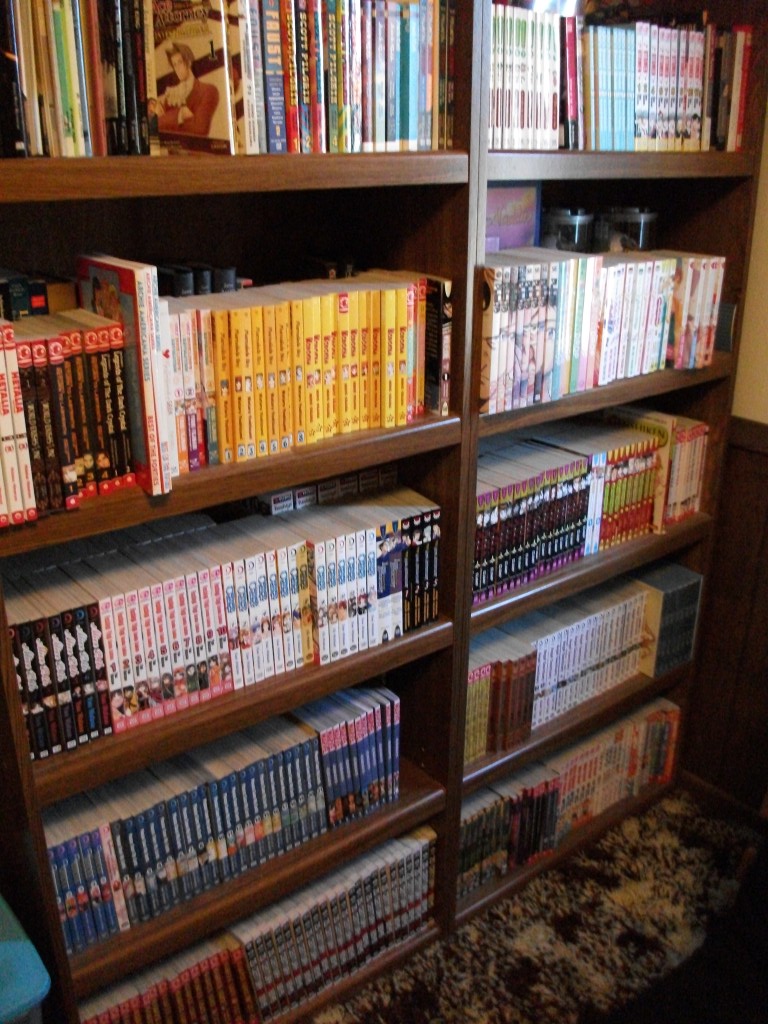
I’m going to sort of “cheat” for the next few posts on this topic. I decided to move on from the novels I loved in middle and high school for now to the manga I loved at that time, but technically, it wasn’t always available. The unflopped-$10-or-less-a-pop manga boom began when I was just getting to college. When I was in middle and high school, I had limited access to manga. What I did get was imported from Japan (at least I saw pretty pictures and practiced my fledgling understanding of Japanese, but I certainly didn’t totally follow the story) or limited/edited/flopped (as in mirror imaged to follow American left-to-right reading style)/much more expensive for the most part. In other words, this library wasn’t anywhere near this large back then (each shelf is double-stacked; there’s another row of volumes behind it, although some non-manga stuff has creeped in there. Should I be bragging about probably thousands of dollars spent on manga over a decade and a half? Not really, but yes… Yes, I should… ):

Still, the manga I’ll cover in this series meant a lot to me as a middle and high schooler, and they still mean a lot to me today. I may or may not have had the translated volumes until after high school, but I often had import volumes and grew to love these series through anime adaptations, so I certainly knew the stories.

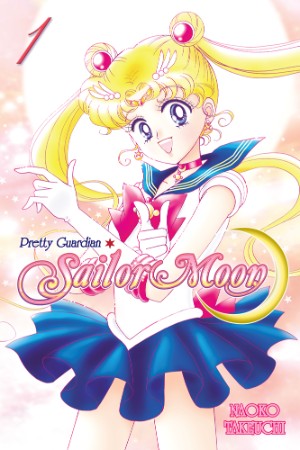
Bishoujo Senshi Sailormoon (Pretty Solder Sailor Moon) by Takeuchi Naoko

I have to start here. Sailor Moon was my first “official” introduction to anime at age 12–what I understood to be anime, anyway–and it snowballed into a huge part of my life ever since. Japanese anime and manga not only inspire me creatively, but this facet of pop culture inspired my love for the Japanese language and culture, helped me make many of my most treasured friends, and led me to meet my boyfriend of seven years in a college Anime Club, too. (More than seven years ago. We didn’t date immediately!)

So although I’ve read and seen so many manga and anime since, and I may not think SM stands up as the very best of the best or anything, it means a lot to me. At the time, finding a whole team of girl superheroes–girls around my age at that–spoke to the comic-book-loving girl I was. The series not only balances superhero battles of good and evil, but it has drama, comedy and romance, too.

The series starts with a single heroine, 14-year-old Tsukino Usagi, who discovers she can transform into Sailor Moon and fight evil demons attacking Tokyo thanks to a talking cat named Luna (whom I named my own kitty after). Eventually, she finds four other girls her age who are other Sailor Senshi, and even later, she encounters five more, older and younger girls, to round out the team. (And possibly even more girls after that. It gets complex.) There’s way more to it than that, including reincarnation and a love that lasts through lifetimes, but that’s the very basics.

The anime is actually quite different from the manga, other than characters and the enemies of each battle arc, but I actually did have access to translated SM manga in middle and high school, a sort of butchered version by Mixx/Tokyopop that I collected first in a magazine called Mixx Zine, then in a magazine called SMILE, then in individual American comic-book-style issues, and then in graphic novel form. Actually, some of that was concurrent; they published different arcs at once. And the translation used half English dub names and half original Japanese names; it was just a mess! But still, I collected it eagerly. And a few years ago finally rid myself of the whole haphazard mess… Thank goodness Kodansha started bringing out a much nicer and better translated version last year! (And they were the first to translate the prequel series, Codename Sailor V, yay.)

The original manga is 18 volumes, although the re-release packs more in one volume, so it should be 12 (14?) in the end. Although it’s much more drawn out, I think I prefer the anime to the manga, although I’m a fan of the manga’s gorgeous style. Still, I appreciate having two versions of the same story; many manga are almost completely unedited adaptations of their manga (or these days, light novel or game) origins.

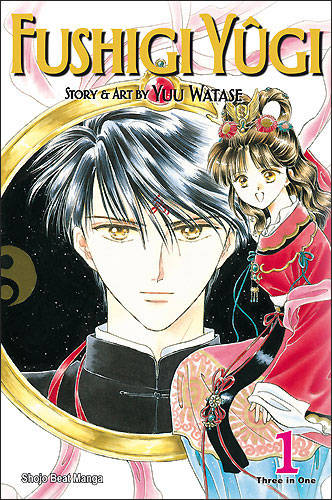
Fushigi Yuugi (or Yugi; “Mysterious Play”) by Watase Yuu

This series became my absolute favorite series in middle school, perhaps only eclipsed in high school by a another Watase series, Ayashi no Ceres. I started with the anime (and watched it four or five times all the way through–there was less to watch back then!) and collected the manga in Japanese shortly thereafter, but some of the manga was available in English by the time I got to high school, in a magazine put out by Viz called Animerica Extra. I collected the manga in English through the magazine for all of its run, but it was canceled before the 18-volume manga ended, and years later I got rid of the magazines and collected it in six big three-volumes-in-one re-releases.

FY follows the tale of two 15-year-old Japanese best friends, Yuuki Miaka and Hongo Yui, who get magically sucked into a book about fictional ancient China. One goes on to become the Suzaku no Miko (“priestess of Suzaku”‘; Suzaku is one of four mythical beasts in Chinese folklore), and the other the Seiryuu no Miko, her mortal enemy. How these two friends come to be at such odds is a compelling part of the drama, and the two are in a race to gather their seven warriors and call their mythical beasts to grant them three wishes. Oh, and those warriors? Most are handsome men, and there are love triangles and rectangles and all sorts of shapes going on, which spurs more of the drama. And the series can be pretty funny at times, too.

There’s a prequel series, Fushigi Yuugi: Genbu Kaiden, about the first Japanese girl to become a miko in this ancient book, that’s still coming out both in Japanese and English, but volumes are few and far between these days since Watase is juggling multiple projects and this one seems to be on the back burner. The middle schooler in me loved hearing there would be another tale set in that universe (especially since we learn a bit about this protagonist in the original series), and I do love many things about it, but it perhaps doesn’t have quite the charm as the original to me (it’s less funny, too), and the conflict is more political than personal like it was in FY. I actually would have preferred a prequel story about the Byakko no Miko, who comes after the Genbu no Miko, from what we learned in the original FY, but I’m not sure Watase will be up for it since she’s accomplished her dream of doing a weekly shounen (boys) manga, as opposed to the monthly shoujo (girls) manga she used to do. Ah, well.

Posted in Books I Loved in Middle/High School, Reading

Books I Loved in Middle/High School, Part 4

This time I’m finally going to discuss a couple of books I liked in high school. During middle school, I read a lot of long-running series. In high school, I put many of those aside and gravitated toward one-shot books or books from short series.

The French Lieutenant’s Woman by John Fowles

I read, discussed and wrote essays about this book for school not once, but twice, in high school and in college. It’s a good thing I fell hard for the book during my high school English class; seeing it on my college course syllabus was a welcome surprise, something I might not have felt about some other required reading books with which I never quite connected.

The plot involves a woman ostracized by society for “having relations” while unmarried to a French lieutenant who was passing through town. (Shades of The Scarlet Letter.) An engaged gentleman becomes fascinated with this mysterious woman, and he soon discovers that there is far more to her than meets the eye.

More compelling to me than the plot–which I did enjoy–was the narration. Fowles frequently breaks the fourth wall and addresses the reader about the craft of writing. He went on to write three different endings to the story! I never saw the movie, but I wonder if they filmed all three endings. I also want to know how they translated the narration, which was an essential part of the book to me. Maybe I should pick the film up.

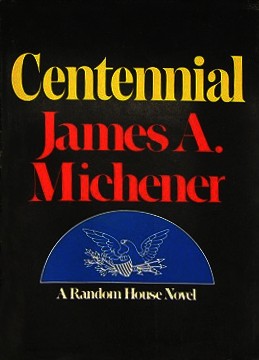
Centennial by James A. Michener

This book wasn’t any part of my compulsory reading for school. What prompted me to pick up this massive tome (1000+ pages in my version) was the massive TV miniseries (21-ish hours total). This was a couple of decades after it first aired, but it was airing again on some cable network while I was in high school. My mom had liked it when it first aired and thought I might like it, too. She was right! I was so hooked, I even warned a friend who called me one of the days an episode was airing that I had to hang up when it started airing. And I did wind up literally hanging up (she was still talking). She called back to ask what happened, and I said, “My show is on!” and I hung up again. Ah, what a good friend I was… (She forgave me!)

I actually have minimal interest in Westerns, although I’ve watched a few. What compelled me to love this show was the unceasing drama, a saga of a fictional Colorado town that lasted generations. I found the same and more in the book, which my mom also had on hand. Luckily, I loved the show enough to make it through the first few chapters, though… Because they literally began with the formation of the earth that made up this town and continued through some pre-historic animals living there… If I’m not mistaken, it was at least 100 pages, if not more. (What was Michener’s editor thinking?! I’m guessing it was something he was known for.) I remember they pretty quickly brushed past that part in the TV series. In any case, once you get past (or skip) the pre-historic part, you get to the juicy drama, and it becomes a page-turner. I finished it pretty quickly.

I thought I might like more of Michener’s works, so I picked up a few more volumes. All of them had pre-historic first chapters… And not knowing for sure I’d love the drama within, I gave up on them. (I probably should have skipped those chapters, but I never do that!) Still, Centennial remains dear to me. I got the DVD set a few years ago, and I became hooked again and re-read the book. My well-worn copy from the 1970s will always remain on my bookshelf.

Posted in Books I Loved in Middle/High School, Reading

Books I Loved in Middle/High School, Part 1

Since I’m an aspiring YA (and maybe MG) author, I want to cover some of the books I loved when I was in middle school or high school. (We’re looking at the 1990s here for the most part.) The list would be far too long to cover in one post, so how about a couple of books per entry, with updates from time to time?

Perhaps these books won’t be among the most well-known books in the modern genre. I like those, too. But so many of my favorite YA and MG books were books I read when I was a bit out of the intended targeted audience age range. I didn’t give Harry Potter a chance until I was 19. I know A Series of Unfortunate Events is aimed at middle school kids, but I was cracking up over Lemony Snicket’s strange prose and stranger plots while in college.

Please comment with your favorite MG and YA books from when you were actually in middle and high school!

The Chronicles of Prydain by Lloyd Alexander


I have school to thank for this one. One of the optional summer reading books in 5th or 6th grade was The Black Cauldron. Yes, that’s the second and not the first book of the series. My guess is the Disney animated version—as virtually unknown as that movie was even by the 1990s—being named The Black Cauldron even despite combining books one and two was the reason the teachers chose that book. It took particularly dedicated readers to opt to read it for their assignment because you really ought to have read The Book of Three first, which meant another book to read. (And yes, at the urging of several of us, the school eventually recommended that one rather than the second book in the series.)

Well, skip having to read one extra book. I was hooked and I read all five books that summer. (In addition to whatever other summer reading book I had to read for school—whatever it was, you can tell it didn’t much impress me.) I can’t remember, but I think these books were responsible for my love of fantasy thereafter. I know one of my dear friends at school also got immersed in them, and we loved dwelling in fantasy worlds, even co-writing a little journal of letters between two medieval maidens. (Which was an assignment for school, but we had a blast!) I wrote a hilarious fantasy story I thought was the shiznit that I entered in some kids’ writing contest. I didn’t win. Perhaps because it’s incredibly hilarious but actually was intended to be taken quite seriously. (I have half a mind to share it here someday. I can’t read it with a straight face.) I have to mention that it involved a wizard named “Googan” (initially named “Hoover”), a hero named “Dwycin” (pronounced with a hard “c,” which no one seemed to know until I told them!) and a wonderfully stereotypical villain who so graciously consented to fight the hero in a “non-magical fight” so things would be fair for the both of them. He lost.

I re-read The Chronicles of Prydain a few years ago, and I still loved them, even if I didn’t have the same passion for them that I did as a child. I loved how the characters evolved over the course of the series, and I was surprised to find that my least favorite in the series as a child (Taran Wanderer) was one of my favorites as an adult. The villains still felt actually scary and threatening. (The Disney adaptation still leads much to be desired, even if I bought the DVD nonetheless. For starters, when a character is known for being “of the red-gold hair,” you don’t make her a total blonde…)

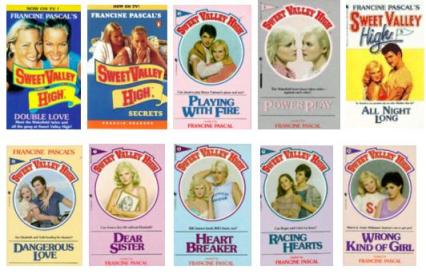
Sweet Valley High/Sweet Valley University by Francine Pascal (/team of ghostwriters)

My best friends in middle and high school were named Jessica and Elizabeth, and both were blondes. And no, this isn’t some snarky comment about how the SVH twins were my best friends, I’m actually serious. I just thought it was a weird coincidence at the time. (That, and they had a friend named Amy—that’s me! I wasn’t blonde, shallow or boy-crazy, though…) My life in high school was nothing like SVH, and my Jess was a million times sweeter than the one in the books. The book Elizabeth was pretty nice and sweet, though, just like the Liz I knew.

I’m not sure why I found these books so compelling in middle school. I think a friend showed me one in the school library that had a “naughty” bit we found so salacious, I had to pick the books up. (I think it was simply a dating couple kissing, but you know, we were 10…) Over the course of a few years, I think I read every SVH and SVU book out there (at the ripe age of 10, I felt so much more mature than those who would read Sweet Valley Twins and Sweet Valley Kids, so I never got into those) and I felt a special attraction to the side books in which really weird things happened. (I was teased when caught with Return of the Evil Twin before class, but I actually managed to grab the girl’s attention when I explained that the book featured the long-lost identical twin of a homicidal maniac teen girl who just happened to be a dead-ringer for Elizabeth and Jessica in the first place—all she needed to do was dye her hair blonde and even the girls’ family was fooled!—who had intended to secretly kill Elizabeth and take over her life and was presumed dead, but actually wasn’t dead, you see, and now wanted her twin sister to help her take over both twins’ lives… Only now they were arguing over who got to be more popular Jessica for some reason.)

I don’t know what it was about these books: a glamorous take on school life (but I’d rather have that crazy drama in my imagination than in real life), a TV show tie-in I enjoyed, or just how they sucked me in from start to end, but I was a SVH addict for a number of years in middle school. I once impressed the whole family by reading a 400-page one in a single day. My mom literally bragged about it to my extended family! (I’ve read books of length in a day since to fewer accolades, of course, but this was the first time.)