Blog

Posted in Writing

Writing vs. Editing: Which Do You Prefer?

I’ve been neglecting this blog the past couple of months, so I apologize for the delay in updates! Post holidays, I had a lot of work projects, but I managed to fit in writing and editing for my own creative projects, too, which inspired the topic for this post:

Do you prefer writing the first draft or editing it later?

I’ve heard people on both sides of the fence. I love my wonderfully inspired moments when I’m first drafting a project, but those aren’t as frequent as I’d like, and most days I only write a very little. When I’m drafting, sometimes the task ahead of me can seem gargantuan, which can be a bit overwhelming. So unless I’m struck by that “magic” where I pump out thousands of words in a writing session instead of hundreds, I prefer editing.

Strangely, editing can be just as gargantuan a task as drafting—perhaps more so—but it doesn’t feel that way to me when I’m working. I have hundreds of pages of text to work with, to cut and slash and move around. And yes, to add to, but for some reason, even adding an entire chapter or two (or ten!) doesn’t seem so bad when I think, “Well, I’ve still got hundreds of pages here already!”

Editing never seems to end, really! (At least perhaps until it’s finally locked in and printed.) But it doesn’t seem too difficult a task because you’ve spent so much time in your world by the time you’re on draft two or five that you feel like it’s just a matter of fixing this or that, rather than scrapping everything and starting over completely.

…Which I hope I don’t have to do with one of my WIPs that seems profoundly broken, even though I’m in the last chapter or two. Sadly, editing isn’t always magic enough to fix things.

But in my work, I tend to prefer editing to writing, too, and I enjoyed my time as a writing tutor helping people improve their essays. That’s another reason I love beta reading, too!

Posted in Geek Out, Reading

Happy Reading, Happy Holidays!

I haven’t been blogged in a few weeks, largely because of the holidays. I hope you’re all enjoying the end of the year and all the vacation time (I hope), celebration and laughter that comes with it. I know I have!

I just decided to drop by and blog about the books I got this Christmas:

  • The Casual Vacancy (don’t know when I’ll read it, but I have to read Rowling’s new offering!)
  • The Luxe final book (I got this from a friend a few weeks ago–I’ve yet to read the series, but she likes it so much, she got me all four over the past couple of years!)
  • Death Note complete box set (I borrowed it from the library in the past, and now I have my own copy; one of the most thrilling manga I’ve ever read [until about halfway through, but it’s still good])
  • Fullmetal Alchemist 3-in-1 volumes 1-3 (so really volumes 1-9; also a library read in the past, and one of my favorite anime series [both incarnations])
  • Skip Beat 3-in-1 volumes 2-3 (so really volumes 4-9, as I had 1-3 already; another former library read, a humorous and fun shoujo story)

I also got a lot of games, so it’s going to be hard to decide which to do in my free time. What reads did you get this year?

Posted in Reading

My Reads for 2012

It’s a little early, and if I find the time, I may finish the book I’m currently working on (and another… probably not, but you never know), but I thought I’d list the books I read this year! I’m a little excited because last year I barely read any books. I got a lot more gaming done, though. Sometimes it seems like I have to rotate my hobbies if I ever want to have time for it all.

This list is nothing compared to some of my friends’, who single-handedly keep the library open or the e-bookstores in business (I kid). But there are five 1000-ish-page books on this list, so that’s got to count for something, right?

2012 was a pretty awesome reading and writing year for me. I got into one of my favorite series (a few years behind most fans), which in turn inspired me to get back into serious creative writing, and I finally finished my first manuscript. (I’ve gotten close with a second one, but we’ll see if I can finish its first draft within the last few weeks of the year or not!)

This list covers novels only, no graphic novels or manga, of which I read plenty this year:

  1. Graceling by Kristin Cashore (I’d started it in 2011, though)
  2. Mr. Monk on Patrol by Lee Goldberg (I was a big fan of the show, and some of the books continue on from where the show left off–too bad they’re ending in a few weeks!)
  3. The Hunger Games by Suzanne Collins
  4. Catching Fire  ditto
  5. Mockingjay ditto (this was the new favorite series–I read books 2 and 3 over a weekend)
  6. Fire by Kristin Cashore
  7. The Tenant of Wildfell Hall by Anne Bronte (because it was about time I read a work by the third Bronte sister, and I’d enjoyed the TV production)
  8. The Girl Who Was on Fire collection of essays (still obsessing about Hunger Games at the time)
  9. A Game of Thrones by George R.R. Martin (I got into the show a year late)
  10. A Clash of Kings ditto
  11. Mr. Monk Is a Mess by Lee Goldberg
  12. The Sweet Life ebooks 1 and 2 by Francine Pascal (since I got the ebooks for review–I still haven’t finished the saga, though; as long as I wasn’t reviewing, I was waiting for the print version)
  13. Sweet Valley Confidential ditto (another book for review)
  14. A Storm of Swords by George R.R. Martin (my favorite of the series by far)
  15. A Feast for Crows ditto
  16. America Again: Re-Becoming the Greatness We Never Weren’t by Stephen Colbert (it has pictures, but it counts, right?)
  17. A Breath of Eyre by Eve Marie Mont
  18. A Dance with Dragons by George R.R. Martin (my least favorite of the five–it took me three months to finish, as I kept getting distracted. The others took me about a month each.)
  19. Who Could That Be at This Hour? by Lemony Snicket (yay for more Snicket!)
  20. Divergent by Veronica Roth (a really addicting read I got through in three days; I’m going to read the next one soon, I hope)
  21. Bitterblue by Kristin Cashore (still working on it–I wonder if I’ll finish by the end of the year?)

Here’s to more good reads in 2013! What did you read this year?

Posted in Writing

Was I Here or Was I There? Tricky Narration

Over the past few weeks, I’ve had the pleasure of beta reading a friend’s latest manuscript.I’ve done this in the past with her works, but this time she thought to ask, “Why do you keep changing my ‘here’s”to ‘there’s, my ‘this’es to ‘that’s, my ‘last night’s to ‘the previous night’ or ‘the night before’?” We’re talking in her first-person past-tense narration, by the way. I leave them alone in dialogue or in internal monologue, and I would have left them alone in present-tense narration.

But why do I change present-tense words to the past tense? Especially since, as I’ve been doing some editing of some of my own work lately, I still find instances of ‘here,’ ‘this,’ ‘now’ and the like in my own narration? (Which I then promptly change, but still, when I originally wrote them, they must have seemed natural to me!) And we both have found examples of the present tense in past tense narration in published works. She found one that had both “this” and “that” in the same sentence and it didn’t make much sense to me!

But that’s just it–I guess I change these words because they don’t make sense to me. I know that narration isn’t supposed to be a literal representation of the character talking about what happened in the past. (Who speaks in novel form, for one?) But that’s how I picture it. The character sitting with you now, in your living room, for example, talking about things that happened to them last week, last month or years ago, somewhere else. To me, if the narrator says “here” in the narration, she’s talking about your living room then. If she says “last night,” she’s talking about the night before you’re currently reading, not the night before action that took place days, weeks, months, years before.

My friend says she pictures the narrator like “cataloging” the events in real time, so she’s still talking about the past, but it’s just happened. She’s still wherever “here” is, she’s still one day away from “last night,” she’s just talking play-by-play as things happen, only in the past tense. So in other words, where my friend would write something like:

This key in my hand was how I was going to get out of here.

I’d prefer:

That key in my hand was how I was going to get out of there.

And if I wanted some immediate thought with “here” and “this,” I’d change it to internal monologue. Of course, this is editor-me speaking. Writer-me sometimes forgets that and I don’t catch it for a long time. And other readers don’t change it, either; it’s not necessarily “incorrect,” it just sounds weird to me!

Have you noticed the changes in tense in your writing or in published works? Do you prefer one style over the other, or haven’t you thought about it before?


Posted in Books I Loved in Middle/High School, Reading

Books I Loved in Middle/High School, Part 9

This week I’m continuing my look at manga I loved reading in middle and high school. (See the last post for an explanation about a bit of the “cheating” I’m doing here.)

Ayashi no Ceres (Ceres, Celestial Legend; literally “Ominous Ceres”) by Watase Yuu

My first Watase series, Fushigi Yuugi, was my favorite manga and anime for a couple of years, so that inspired me to check out what else the creator had done. The series she was working on at the time was Ayashi no Ceres, which soon surpassed Fushigi Yuugi as my favorite series throughout middle and high school. At the time, no one was bringing it out in the States, so I imported the manga and read some fan translations (in script form–none of this “scanlation” stuff that goes on now) until Ceres finally got a US release when I was in college. Ceres eventually got an anime adaptation in 2000, but it was far shorter than the Fushigi Yuugi anime, and a lot had to be cut out. The 14-volume manga remains the best way to get a hold of the full story.

Ceres had a beginning I could easily see in a paranormal YA book today: High school twins Mikage Aya and Aki (Aya’s a girl, Aki’s a guy) are dragged to their grandfather’s house for their 16th birthday, a tradition the Mikage family upholds for all of their family members. Aya and Aki are confused to see their normally loving extended family acting somber and cold towards them. They open the gift they’re given and discover it’s a mummified hand! The hand causes Aya to transform into an older, beautiful woman and Aki to be cut all over his body by invisible daggers. The Mikage family tells Aya that she has to die, and even her parents do nothing to save her.

Aya manages to escape very real attempts on her life and finds a little solace in a new adoptive family that can explain what’s going on and wants to protect her. It turns out Aya is the reincarnation of a tennyo, a “celestial maiden,” that was a Mikage ancestor in ancient times, and there are other celestial maiden reincarnations out there, too. Every few generations, the Mikage maiden reincarnates in a member of the Mikage family on her 16th birthday, with the aim of wiping out all of her descendants and finding the celestial robe that will allow her to return to the heavens. Aya is the first in the history of the family to escape immediate execution, and she has to come to terms with this celestial being who takes over her body at times and communicates with her through her mind. Meanwhile, her brother is discovered to be the reincarnation of an important figure in the Mikage family as well: the original mortal man who forced the celestial maiden into marriage by stealing her celestial robe–and he wants his wife back. Ceres wants Aki dead; Aya wants to save her brother.

Ceres has got action, romance, fantasy and science fiction elements–I’ve barely scratched the surface! I remember actually not being too enamored with the main love story with Aya, but I loved the characters and the plot overall. I think the story holds up well even today; it’s still among my favorite series.

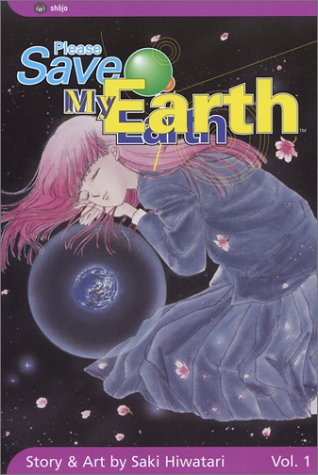
Boku no Chikyuu wo Mamotte (Please Save My Earth; literally “Protect My Earth”) by Hiwatari Saki

Please Save My Earth–which fans in the US call PSME for short–is one of those I’m “cheating” to count as a middle and high school manga fandom. I did get introduced to the series while in high school–I won a contest Animerica Extra held and they sent me the first VHS tape of the anime–but the manga wasn’t available in the US until I was in college. Since I couldn’t read it yet in full, I watched the six episodes of the (regrettably short) anime (that barely, barely touches on the whole story but does a great job adapting the first few volumes of the manga), imported the manga, and read as much information as I could about the series in magazines and online during the burgeoning years of the Internet. It was such a relief to finally be able to read the English release a few years later.

The 21-volume manga PSME ran in Japan from 1987 to 1994, a number of years before I got into it in the late 1990s. It’s actually even today still referred to by many modern manga artists as a favorite, particularly by those who do shoujo (girls) manga. There’s a sequel series that started in the mid-2000s and is still going–I just wish PSME had sold well enough to convince US publishers to bring that out, too! (Until then, I’m stuck with import manga.)

PSME is another tale of reincarnation. (I love these types of stories, if you couldn’t guess.) 16-year-old Sakaguchi Arisu (or “Alice”) is so painfully shy, she cries when 7-year-old Kobayashi Rin, her neighbor, teases her each day after school. Asked one night to be his babysitter–it turns out Rin has a crush on the older girl and asked his parents to request her–Arisu can’t bring herself to weasel her way out of the nightmare. Rin behaves for a bit but gets angry when Arisu (understandably) rebuffs his innocent advances and talks instead about having a crush on a boy at school. He takes it out on something he knows Arisu finds dear: a potted plant.

Rin knows that Arisu can hear animals and plants speaking to her, and plants and animals seem drawn to her, something her family has never been able to explain. By threatening to toss a potted plant off of the highrise apartment building balcony, Rin is basically threatening to kill something she thinks of as a friend. Arisu slaps Rin for being so cruel, but the force of the slap makes Rin fall of the balcony himself. He barely survives, and Arisu is devastated.

When Rin awakes, he’s not quite himself, but he keeps his new, darker, more adult-like side from his parents, who ask Arisu to pretend to be Rin’s girlfriend to humor him; after what she did, Arisu can’t bring herself to say no. It’s about this time that Arisu has a dream that she’s a beautiful humanoid alien who studies Earth from a secret scientific base on the moon. Shortly thereafter, Arisu befriends some people at school (including the one she sort of had a crush on) who’ve also had dreams of being alien scientists who work together on the moon, and they begin to realize they’re dreaming of their former lives.

PSME has a crazy, heart-aching romance amidst heated love triangles (pentagons?) and drama. It turns out life on the moon base wasn’t all rosy, and betrayals and feelings from those on the moon continue to haunt the current reincarnations. Rin reveals he was one of the moon scientists, too; and there’s a painful reason why he’s nine years younger than the other reincarnations. There’s also a lot of sci fi action, as reincarnated people from the moon have ESP, and Earth is home to a few people with ESP who are willing to fight the aliens if they do harm to the planet.

PSME is still one of my favorite manga and anime ever, and I think it would appeal to any age group. The romance is one of the sweetest I’ve ever read. Some of the characters make me swoon even to this day!

Posted in Writing

NaNoWriMo!

So November is National Novel Writing Month and I imagine that a lot of you who read this blog are lost in worlds of your own creation, aiming to have at least 50,000 words on the page (or the screen) by the end of month. I’d love to hear about any stories you’re working on! Share a link to your NaNoWriMo profile if you like.

I’m also curious to hear about NaNoWriMo success stories. Who’s reached the word count goal in the past? Did you go on to finish the novel? Did you query, publish or self-publish or move on to a new work? (Or both?)

I’m asking a lot of questions and would like to share my own NaNoWriMo experience, but I don’t have a proper tale to tell! I’ve never officially participated in NaNoWriMo. This year I’m too busy with work writing and I’m juggling three WIPs (one YA, one MG and one “classified” short project) and don’t want to start yet another new work.

In the past, though, I sort of participated twice–I’m thinking 2007 and 2009 (but don’t quote me on that). I didn’t think I could officially participate because you’re supposed to write something brand new, if I understand correctly, and I was in the midst of my never-ending first draft for a YA book (120,000 words in the end and still not half way finished, ha) that took me nine years to finally abandon once and for all, after I mined the very best 5000 words or so and melded it into my first completed novel. So both of my unofficial NaNoWriMo experiences I worked on that manuscript, only I didn’t follow the rules in another way: I wasn’t aiming for 50,000 words. I was just determined to write half an hour a day at minimum in honor of the occasion, and that’s what I did. I even kept that up for some time into December.

I did also have similar experiences earlier this year. For one, I wrote 58,000 words in nine days early in the year when I had the inspiration for what would become my first completed draft of a book. In August of this year, I eked out almost another 50,000 words on a WIP because I had less work than usual. This time, it took me the whole month, and not every day of writing went smoothly.

And of course, I write tens or even hundreds of thousands of words each month for work, but that’s not quite the same!

Posted in Books I Loved in Middle/High School, Reading

Books I Loved in Middle/High School, Part 8

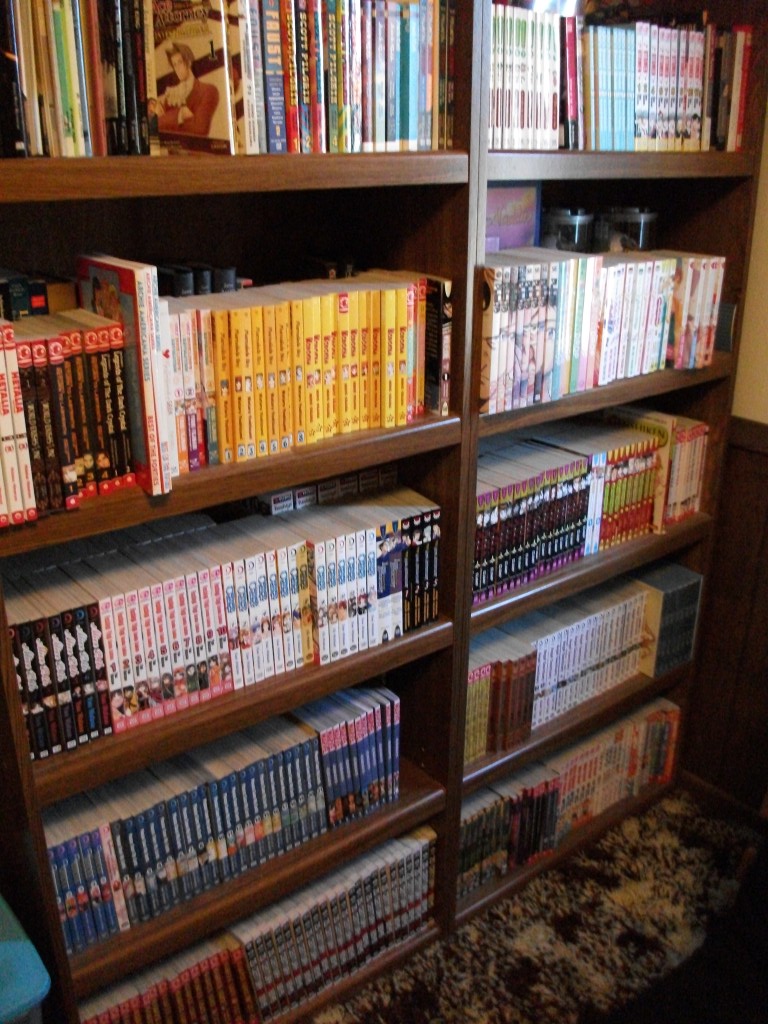
I’m going to sort of “cheat” for the next few posts on this topic. I decided to move on from the novels I loved in middle and high school for now to the manga I loved at that time, but technically, it wasn’t always available. The unflopped-$10-or-less-a-pop manga boom began when I was just getting to college. When I was in middle and high school, I had limited access to manga. What I did get was imported from Japan (at least I saw pretty pictures and practiced my fledgling understanding of Japanese, but I certainly didn’t totally follow the story) or limited/edited/flopped (as in mirror imaged to follow American left-to-right reading style)/much more expensive for the most part. In other words, this library wasn’t anywhere near this large back then (each shelf is double-stacked; there’s another row of volumes behind it, although some non-manga stuff has creeped in there. Should I be bragging about probably thousands of dollars spent on manga over a decade and a half? Not really, but yes… Yes, I should… ):

Still, the manga I’ll cover in this series meant a lot to me as a middle and high schooler, and they still mean a lot to me today. I may or may not have had the translated volumes until after high school, but I often had import volumes and grew to love these series through anime adaptations, so I certainly knew the stories.

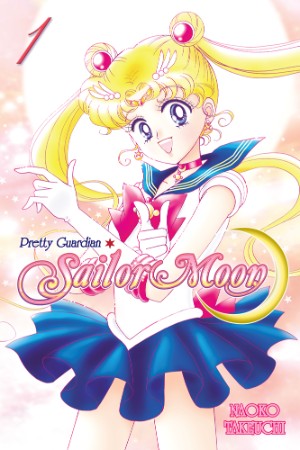
Bishoujo Senshi Sailormoon (Pretty Solder Sailor Moon) by Takeuchi Naoko

I have to start here. Sailor Moon was my first “official” introduction to anime at age 12–what I understood to be anime, anyway–and it snowballed into a huge part of my life ever since. Japanese anime and manga not only inspire me creatively, but this facet of pop culture inspired my love for the Japanese language and culture, helped me make many of my most treasured friends, and led me to meet my boyfriend of seven years in a college Anime Club, too. (More than seven years ago. We didn’t date immediately!)

So although I’ve read and seen so many manga and anime since, and I may not think SM stands up as the very best of the best or anything, it means a lot to me. At the time, finding a whole team of girl superheroes–girls around my age at that–spoke to the comic-book-loving girl I was. The series not only balances superhero battles of good and evil, but it has drama, comedy and romance, too.

The series starts with a single heroine, 14-year-old Tsukino Usagi, who discovers she can transform into Sailor Moon and fight evil demons attacking Tokyo thanks to a talking cat named Luna (whom I named my own kitty after). Eventually, she finds four other girls her age who are other Sailor Senshi, and even later, she encounters five more, older and younger girls, to round out the team. (And possibly even more girls after that. It gets complex.) There’s way more to it than that, including reincarnation and a love that lasts through lifetimes, but that’s the very basics.

The anime is actually quite different from the manga, other than characters and the enemies of each battle arc, but I actually did have access to translated SM manga in middle and high school, a sort of butchered version by Mixx/Tokyopop that I collected first in a magazine called Mixx Zine, then in a magazine called SMILE, then in individual American comic-book-style issues, and then in graphic novel form. Actually, some of that was concurrent; they published different arcs at once. And the translation used half English dub names and half original Japanese names; it was just a mess! But still, I collected it eagerly. And a few years ago finally rid myself of the whole haphazard mess… Thank goodness Kodansha started bringing out a much nicer and better translated version last year! (And they were the first to translate the prequel series, Codename Sailor V, yay.)

The original manga is 18 volumes, although the re-release packs more in one volume, so it should be 12 (14?) in the end. Although it’s much more drawn out, I think I prefer the anime to the manga, although I’m a fan of the manga’s gorgeous style. Still, I appreciate having two versions of the same story; many manga are almost completely unedited adaptations of their manga (or these days, light novel or game) origins.
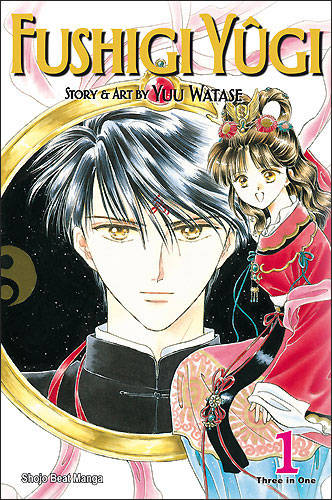
Fushigi Yuugi (or Yugi; “Mysterious Play”) by Watase Yuu

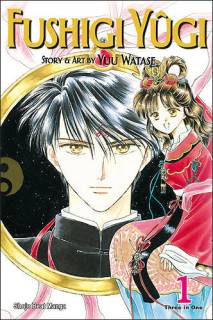
This series became my absolute favorite series in middle school, perhaps only eclipsed in high school by a another Watase series, Ayashi no Ceres. I started with the anime (and watched it four or five times all the way through–there was less to watch back then!) and collected the manga in Japanese shortly thereafter, but some of the manga was available in English by the time I got to high school, in a magazine put out by Viz called Animerica Extra. I collected the manga in English through the magazine for all of its run, but it was canceled before the 18-volume manga ended, and years later I got rid of the magazines and collected it in six big three-volumes-in-one re-releases.

FY follows the tale of two 15-year-old Japanese best friends, Yuuki Miaka and Hongo Yui, who get magically sucked into a book about fictional ancient China. One goes on to become the Suzaku no Miko (“priestess of Suzaku”‘; Suzaku is one of four mythical beasts in Chinese folklore), and the other the Seiryuu no Miko, her mortal enemy. How these two friends come to be at such odds is a compelling part of the drama, and the two are in a race to gather their seven warriors and call their mythical beasts to grant them three wishes. Oh, and those warriors? Most are handsome men, and there are love triangles and rectangles and all sorts of shapes going on, which spurs more of the drama. And the series can be pretty funny at times, too.

There’s a prequel series, Fushigi Yuugi: Genbu Kaiden, about the first Japanese girl to become a miko in this ancient book, that’s still coming out both in Japanese and English, but volumes are few and far between these days since Watase is juggling multiple projects and this one seems to be on the back burner. The middle schooler in me loved hearing there would be another tale set in that universe (especially since we learn a bit about this protagonist in the original series), and I do love many things about it, but it perhaps doesn’t have quite the charm as the original to me (it’s less funny, too), and the conflict is more political than personal like it was in FY. I actually would have preferred a prequel story about the Byakko no Miko, who comes after the Genbu no Miko, from what we learned in the original FY, but I’m not sure Watase will be up for it since she’s accomplished her dream of doing a weekly shounen (boys) manga, as opposed to the monthly shoujo (girls) manga she used to do. Ah, well.

Posted in Writing

Handwriting or Typing?

Do you write your first drafts by hand or on a computer? (Or by typewriter? Who knows, maybe some nostaligic people still use those!)

This question seems less and less relevant in the digital age, but I’m still surprised to hear about authors who prefer to handwrite their works, at least initially. I’m so used to my computer that it just seems easier for me to type my ideas out, and I type pretty quickly, too, although not via the proper Mavis Beacon-approved method. (At some point that method, taught to me in elementary school on an old 1980s Mac, morphed into a three-fingers-on-each hand thing that I’ve used ever since.) Also, from years of school, I’ve learned that my taking notes by hand in a hurry amounts to chicken scratch. I’m not sure the method of handwriting my manuscripts would be able to keep up with the pace at which my brain comes up with the words on a good writing day–sometimes even typing is too slow.

That said, I tried it once a few years ago. (When I was really young, I wrote stories in notebooks all the time before I typed them up, but I wonder if that was more because of a limited access to computers.) By the time I scratched out half the words on the page, I knew I wasn’t getting anywhere, and back to the computer I went.

I do, however, handwrite letters to pen pals. Yes, old fashioned snail-mail pen pals; I started pen palling when I was 7 and have never fully stopped, although I admit my letters are far less frequent these days and I keep in touch with a large number of my pen pals online rather than by snail mail. There’s something fun about receiving handwritten notes from a friend across the country or the globe, and I wonder if this tangibleness is part of the appeal for authors who write their works by hand.

Or maybe it’s about being better able to shut out distractions and not having to deal with the headache of staring at a screen for hours on end. I’m definitely not a fan of either of those downsizes to typing.

Do any of you prefer to handwrite? Do you know why? Or do you prefer typing first like me?

Posted in Books I Loved in Middle/High School, Reading

Books I Loved in Middle/High School, Part 7

Today I have a few more books I loved in high school to reminisce about (or “about which to reminisce” if we’re going to be grammar sticklers).

The Mayor of Casterbridge by Thomas Hardy

This book was one of the books we read as a class in, I believe, AP English my senior year. I might have been one of the few who enjoyed it! I can’t explain why the book connected with me, although looking back, I wonder if it was the start of my love for classic English literature that continued in college with the likes of Jane Austen and the Brontës. (And talk about loving “classic” English literature–I did my honors college thesis on Sir Thomas Malory’s Le Morte d’Arthur, arguing it was the first “true novel.” A 15th century work, entirely in Middle English; it was such a blast to read and analyze.) I was so determined to write a good term paper on this book, I even went to a nearby college library for sources. *gasp* We had the Internet, but it wasn’t as comprehensive as it is today, and books always make for more legitimate resources.

The Mayor of Casterbridge begins with a drunkard named Michael Henchard at a tavern selling his wife and baby daughter for a small amount of money to a lonely sailor who offers to buy them off of him. (She’s sitting right there, by the way!) Obviously, Susan isn’t too happy with her husband, but she’s also sick enough of the man (they were arguing, which is why the sailor thought he’d better appreciate her) that she goes along with it. When Henchard recovers, he finds his wife and child gone.

Years pass, and Henchard has become a new man who’s risen through the ranks in his small town of Casterbridge and is now the mayor. But his drunken actions of eighteen years prior still haunts him, and he’s worried people will find out what kind of man he once was. Lo and behold, who should move into town than a sailor’s widow and her young maiden daughter? The book is not only about keeping secrets–and untangling the truth about whether or not Henchard and Susan are still married, at least on paper–but Henchard’s desire to form a fatherly relationship with his daughter without revealing his past.

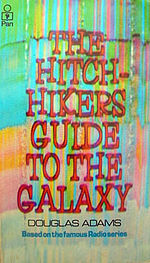
The Hitchhiker’s Guide to the Galaxy series by Douglas Adams

Unless my memories are muddled (which wouldn’t surprise me after more than a decade), I think the first The Hitchhiker’s Guide to the Galaxy was on the “choose your second summer reading book” list for my senior AP English class. I wound up being an English major in college (after a brief detour), and I’m glad I had a foundation in so many of the classics, but admittedly, I only truly enjoyed maybe one in three of the books I “had to” read. When I chose this book for required reading, it was a welcoming break! This book is so funny. I read it quickly and went out and bought this huge five-book collection of the whole “trilogy” (as far as what Adams penned anyway).

It’s been a while since I read it (although I remember the movie that came out a few years ago), but even if it was fresh in my mind, I’m not sure I could fully explain it. Suffice to say it follows an ordinary man on an intergalactic adventure after his home… and the whole planet… is destroyed for a hyperspace bypass. Anyone who talks a lot about towels or tells you that the answer to life is 42, and that what you actually ought to want to know is the question to life, the universe and everything, has read this book!

During the rest of that school year, we had to continue reading books outside of what was required for class discussion, and they had to be “quality” books approved by the teacher. (Some of my other interests wouldn’t fly!) So for a while I got away with reading the sequels (the first one was on the reading list, after all!) until my teacher told me it was time to branch out and read something else. I don’t think I finished all five books, and I’m not even sure where I left off. But still, the first was definitely worth the ride!

And no, I didn’t realize that today’s the anniversary of the book’s publishing when I sat down to write this.

Posted in Geek Out

My Trip to NY

Once a year for the past five years, I’ve visited New York (stayed on Long Island, took the train in to NYC as often as possible) to visit some of my boyfriend’s family. Coincidentally, his family lives a short car or train ride away from one of my best friends of thirteen years, fellow agented writer and one of my beta readers, Melissa. So it’s been a lot of fun making time to hang out with her when I visit–although this is the first year we met as two agented authors!

And speaking of agents, I met mine for the first time, the very kind Jason Yarn, who picked out a chic restaurant with great food, Gramercy Tavern, for our meeting. (I apologize for being a few minutes late! That was the only day I’ve ever had to deal with train delays to that extent!) I had a fun time talking my writing, books in general and the geek culture at large. Now that I’m back home, I need to snap back into focus and get back to editing and working on new drafts!

Some highlights of the trip include:

Shopping

I’m not usually big on shopping, or clothes shopping in particular, but that’s not the case in NY. We hit all of our favorite stores, including Uniqlo, which I admittedly just started liking because it was a Japanese brand of fashion (similar to Old Navy in pricing–I don’t like spending tons on clothes!), but I really do love their HEATTECH line during frigid winters.

We also stopped at the Scholastic store, so I could squeal over Harry Potter and Hunger Games displays.

I hit the HBO Store, Disney Store, Nintendo World, FAO Schwartz, Kinokuniya (Japanese bookstore), Book Off (used Japanese and American bookstore), and Mitsuwa (Japanese marketplace in New Jersey), to name a few.

Eating

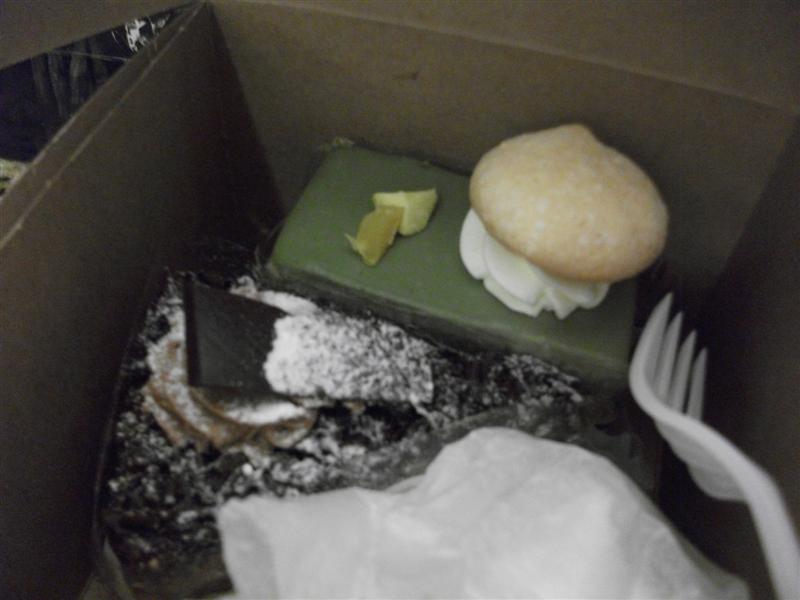
Aside from the aforementioned Gramercy Tavern, we ate at another chic restaurant with yummy food for a lunch, NoHo Star. We got some peanut butter sandwiches at Peanut Butter & Co, ate delicious Japanese food at Go Go Curry (multiple times), dined at the Mitsuwa food court, and stopped by Cafe Zaiya and Sunrise Mart for Japanese cakes and sweets more than once. (Sensing a pattern here? Yes, I tend to focus on Japanese places in NY!)

Wax Museum

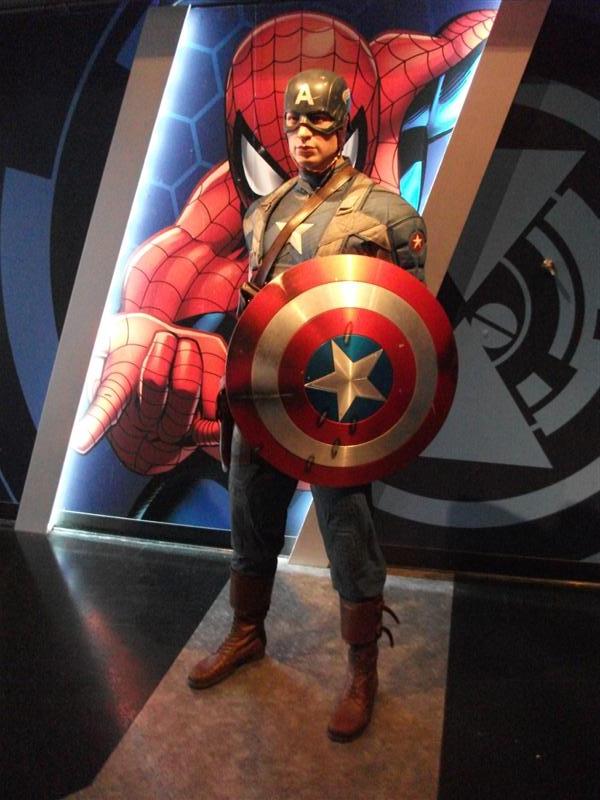
Melissa convinced my boyfriend and I to accompany her to Madame Tussauds, and it was a lot of fun! The wax figures were so real, at one point, we fell for a trick; there was a wax figure of a tourist taking a photo of other wax figures and we seriously hesitated to let her take her picture… Which she never did. There was a Marvel 4D experience, and it left a bit to be desired, plot-wise, but it was amusing. And there were wax figures of the Avengers outside!

Central Park Zoo

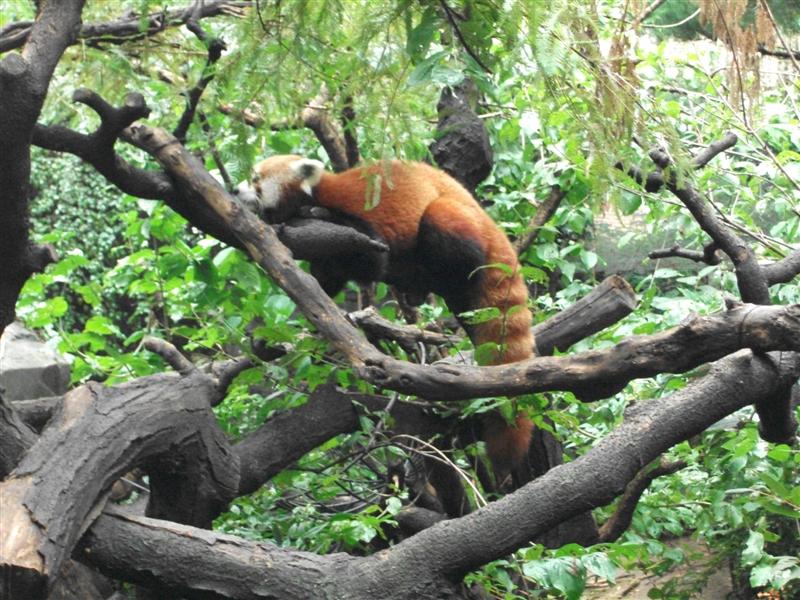
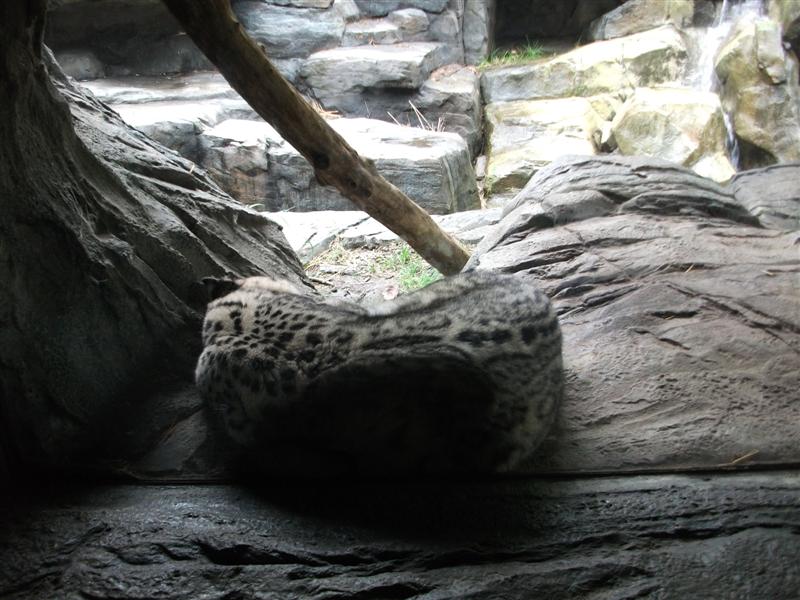
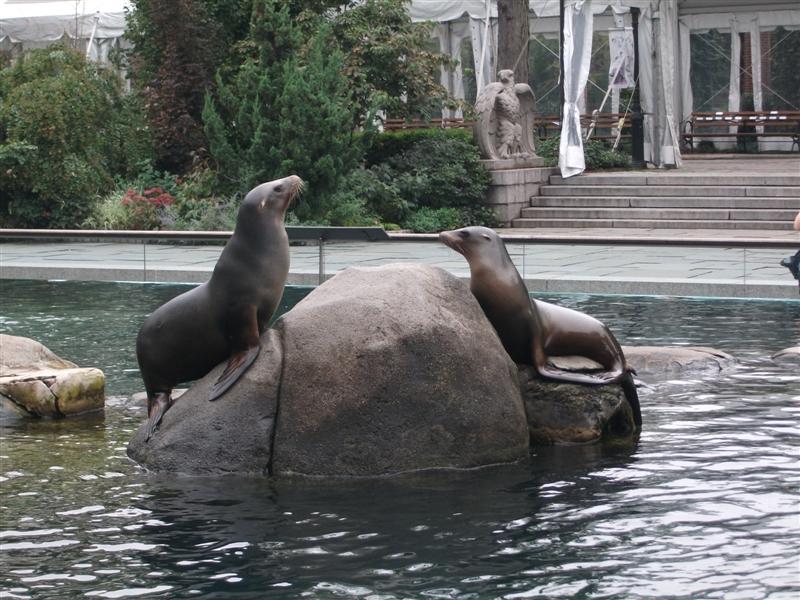
We headed to the Central Park Zoo for the second time; we went a few years ago, too. But it’s conveniently placed in a beautiful location, pretty affordable for a NY attraction, and full of cute animals. The red pandas are my favorites here, but I got slightly better pictures this time of other adorable guys, like the polar bear, the snow leopard and the sea lions! Too bad my camera battery died right toward the end!

All in all, it was a great trip. Bye, NY! (And have fun at the NYCC next week, everyone there! I’m sorry I’m missing it… Even though it’s impossible to move inside the convention center anyway.)